dsh-storyboard-forge
jlnkx5200-beep/dsh-storyboard-forge
Storyboard-to-film pipeline for DeepSeek Harness: Seedream stills, optional ComfyUI depth and matte passes, MiniMax H3 or Sand.ai MAGI-2 video shots and a Three.js stage are compiled into one render plan that Remotion renders frame-exactly. Ships seven shot strategies, six style presets, a SHA256 content-addressed cache, three agent tools and a loopback-only web console; generation needs your own Ark key plus a MiniMax or Sand.ai key (MAGI-2 quota is subject to Sand.ai), and scripts/qa-mock.mjs runs the pipeline end to end without any key. Its HTTP routes have no DSH access check, so a web page open in your browser could call them.
Instalar
dsh plugin --profile web add github:jlnkx5200-beep/dsh-storyboard-forgeREADME
Video Forge
A style-agnostic AI video pipeline for DeepSeek Harness: storyboard in, frame-exact footage out — no GPU required, no style baked in.






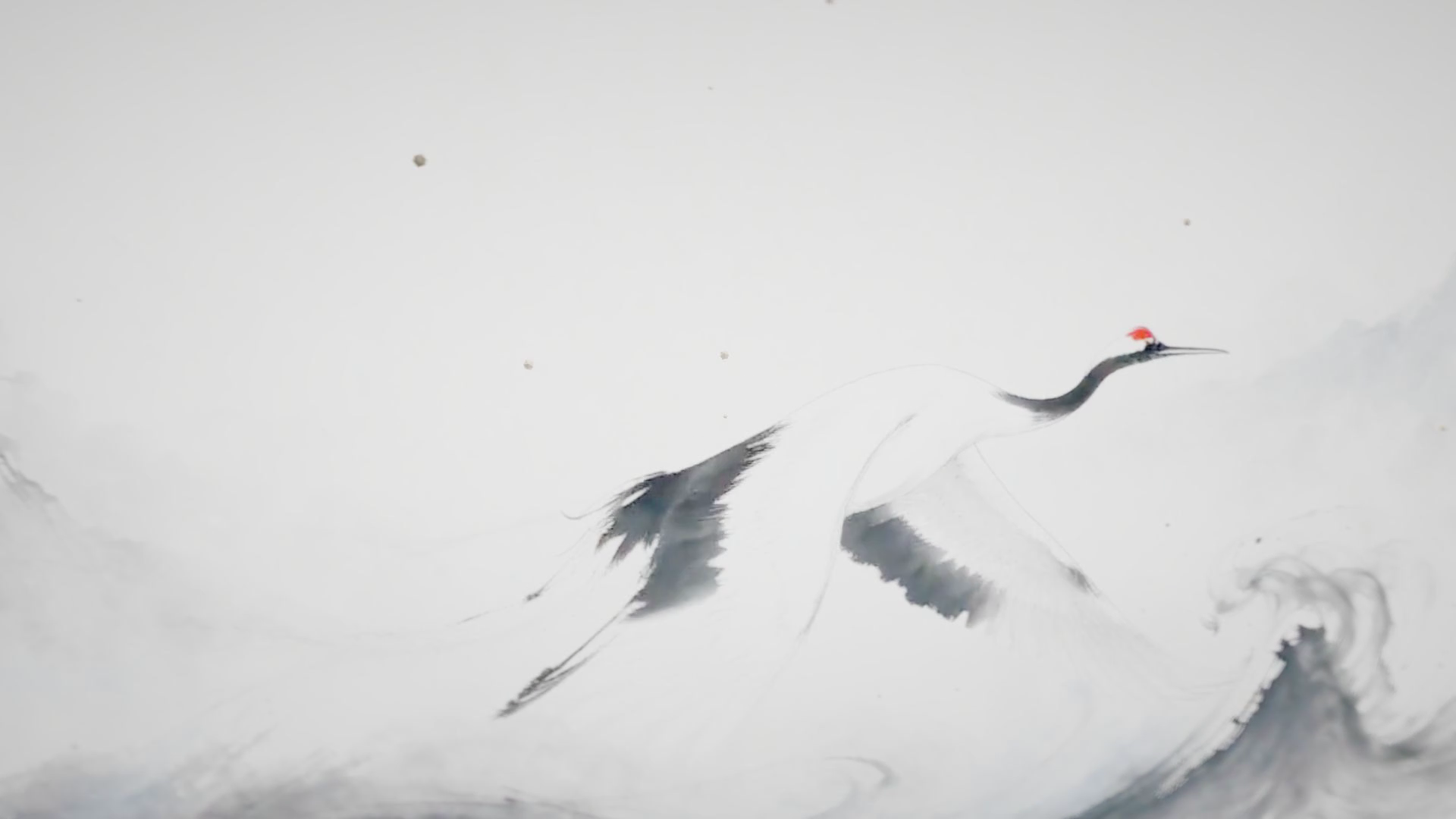
墨卷山河 · Ink Scroll — 15 s · 1920×1080 · 30 fps.
Three shots, one storyboard, < ¥5 of API spend: Seedream stills on real ComfyUI depth maps,
one MiniMax H3 2K repaint, three deterministic Three.js camera moves.
▶ Watch the 1080p cut ·
poster
Why Video Forge
1. The kernel has no style. Presets do.
The renderer exposes exactly four deterministic primitives — depth parallax, spatial stills,
video layers, and compositing — and every aesthetic decision arrives as data through a
StyleSpec. Six presets ship (cinematic-realism, editorial-minimal, anime-atmospheric,
cyber-neon, oriental-ink, video-first), and switching between them changes the look
without touching a line of engine code. Golden-frame diffs are exact:
$ node scripts/check-frames.mjs
frame 0   maxDiff=0   frame 24   maxDiff=0
Style-agnosticism is enforced, not promised: src/core/** (providers, scheduler, cache) is
scanned by the quality gate for three.js, camera and style vocabulary.
2. Two video engines, routed per shot
Video generation is not one problem, so the compiler routes each shot to the engine that is actually good at it.
| MiniMax H3 | Sand.ai MAGI-2 | |
|---|---|---|
| Strength | text-to-video, UI/layout motion, cheap drafts | native 1080p image-to-video, real 4–30 s shots |
| Resolutions | 480P / 768P / 2K | native 1080p |
| References | first frame | up to 20 images, flat price |
| In this pipeline | minimax-direct, minimax-2k-repaint | magi2-direct, magi2-i2v |
minimax-2k-repaint exists because H3 tops out at 768P: Video Forge renders a still, feeds it
back as the first frame and asks H3 for a 2K take, so sharpening happens inside the model
instead of in ffmpeg.
Honest status — MAGI-2 is waiting for quota. The integration, the request contract, the payload sanitizer and their tests are complete and merged; the Sand.ai account behind them has not been granted generation quota yet. Until it is, MAGI-2 shots report
pending_quota(distinguished frominvalid_keybyPOST /magi2/probe) and replay a draft take, so plans still complete end to end. Everything else in this README runs today.
3. Built for an 8 GB consumer GPU
- Split concurrency pools — ComfyUI (local GPU) and the remote APIs are scheduled independently, so a saturated GPU never blocks a Seedream call.
- Content-addressed cache — every still, depth map, matte and clip is keyed by
sha256(provider + model + prompt + params); retries and re-renders are free. - Explicit degradation —
productionmode refuses fake depth or fake mattes instead of quietly shipping a worse frame;draftmode is where cheap approximations are allowed. - ComfyUI custom nodes — eight nodes for depth, normals, matting, tiling, inspection, template injection, host callbacks and workflow manifests.
Architecture
flowchart TD
SB["Storyboard<br/>Markdown table / JSON shots"] --> C["Compiler<br/>strategy · provider · cost"]
C --> DAG["Task DAG<br/>still · depth · matte · clip"]
DAG --> SCHED["Scheduler<br/>GPU pool ⟂ API pool"]
SCHED --> SEED["Seedream 5.0<br/>stills"]
SCHED --> MM["MiniMax H3<br/>T2V / I2V / 2K repaint"]
SCHED --> MAGI["Sand.ai MAGI-2<br/>native 1080p I2V"]
SCHED --> COMFY["ComfyUI<br/>depth · matte · refine"]
SEED --> CACHE["SHA-256 cache"]
MM --> CACHE
MAGI --> CACHE
COMFY --> CACHE
CACHE --> PLAN["RenderPlan<br/>JSON contract"]
PLAN --> STAGE["Remotion + Three.js stage<br/>4 deterministic primitives"]
STAGE --> OUT["Frames → ffmpeg → out/<planId>.mp4"]
classDef host fill:#0d1117,stroke:#4D6BFE,color:#e6edf3
classDef render fill:#0d1117,stroke:#3DA639,color:#e6edf3
class C,DAG,SCHED,SEED,MM,MAGI,COMFY,CACHE,PLAN host
class STAGE,OUT render
Host (src/) and renderer (remotion/src/) are hard-separated: the host never imports
three.js or speaks camera language, the renderer never sees an API key or dispatches a
provider. The only thing that crosses the boundary is a RenderPlan. Details in
docs/architecture.md.
3-Minute Quick Start
Step 1 — Prove the pipeline works, spending nothing
No API key, no GPU, no ComfyUI. The mock provider exercises compile → schedule → cache →
RenderPlan → render.
git clone https://github.com/jlnkx5200-beep/dsh-storyboard-forge.git
cd dsh-storyboard-forge
npm install          # pulls host peer types + tsdown, no DSH checkout needed
npm run build
node scripts/qa-mock.mjs        # 4 shots, 1080p, keyless end to end
The mock providers write deterministic fixtures through the real compiler, scheduler and
cache, then emit a RenderPlan — the JSON that drives rendering — and print a per-task
report. Assets go to a temporary forge home; pass VF_HOME=./out/qa to keep them. Add
--strategy=still-3d to exercise another path. To see pixels, pipe that plan into the
renderer:
node remotion/scripts/still.mjs <planPath> 24 out/cover.png
node remotion/scripts/render.mjs <planPath> out/clip.mp4
Step 2 — Install the plugin into DeepSeek Harness
From npm (prebuilt lib/, nothing to compile):
dsh plugin add dsh-storyboard-forge --profile <PROFILE>
For development, or to hack on the renderer, clone and build instead:
git clone https://github.com/jlnkx5200-beep/dsh-storyboard-forge.git \
  <WORKSPACE>/plugins/dsh-storyboard-forge
cd <WORKSPACE>/plugins/dsh-storyboard-forge
npm install && npm run build
Then, in a DSH session that has the plugin injector:
dev_inject_plugin({ dir: '<WORKSPACE>/plugins/dsh-storyboard-forge' })
Alternatively add dsh-storyboard-forge to your profile's bundles list and restart
DSH. The console appears as a Video Forge panel with four tabs: Compose / Jobs / Plans /
Settings.
Host-side types come from the published
@deepseek-ai/*packages. If you want the build to use your own DSH source tree instead, setDSH_CHECKOUT=/path/to/deepseek-harness— the build script picks it up automatically.
Step 3 — Add keys (only what you will use)
| Provider | Variable | Needed for |
|---|---|---|
| Seedream / Ark | ARK_API_KEY | stills (every strategy except pure T2V) |
| MiniMax | MINIMAX_API_KEY | minimax-direct, minimax-2k-repaint, comfy-pipeline |
| Sand.ai | SAND_API_KEY | magi2-direct, magi2-i2v |
| ComfyUI | — | optional, http://127.0.0.1:8188 |
Interactive, masked, written to ~/.dsh/video-forge.json:
node scripts/set-keys.mjs
or use Settings in the console, or plain environment variables. Keys are never echoed and
GET /status only returns masked forms.
Step 4 — Produce something real
Ask the agent:
video_forge_produce({
  title: 'Mechanical keyboard — launch teaser',
  preset: 'cinematic-realism',
  shots: [
    { id: 's1', shot: 'extreme close-up', durationSec: 5, move: 'dolly-in',
      strategy: 'still-3d',
      prompt: 'macro shot of the aluminium frame, cool rim light, shallow depth of field' },
    { id: 's2', shot: 'close-up', durationSec: 4,
      strategy: 'minimax-2k-repaint',
      prompt: 'keycaps ripple like water as a backlight sweeps across them' }
  ]
})
or paste a Markdown storyboard into the Compose tab. Both paths compile to the same
RenderPlan; the console shows a per-shot cost estimate before you spend anything.
Engineering Gates
Every claim above is backed by a command that fails loudly. All eight run without API keys.
| # | Gate | Command | Scope |
|---|---|---|---|
| 1 | Build | bash scripts/build.sh | host tsc + client bundle (checks DSH checkout, falls back to npm) |
| 2 | Renderer types | cd remotion && npx tsc -p tsconfig.json --noEmit | the whole stage, strict |
| 3 | Plan contract | node scripts/check-plan.mjs --all | every fixture and preset is schema-valid |
| 4 | Visual red lines | node scripts/check-quality.mjs | six dimensions per preset, no fake algorithms |
| 5 | Golden frames | node scripts/check-frames.mjs | re-render is bit-stable (maxDiff = 0) |
| 6 | Node tests | npm test | 41 cases: contracts, cache, scheduler, providers, plan parsing |
| 7 | Python nodes | bash comfyui-nodes/dsh-video-assets/tests/run_checks.sh | 50 cases: 8 nodes, tensor ops, HTTP bridge. With the ComfyUI venv: 50 pass; on a bare interpreter (as in CI) the 17 torch-backed cases skip |
| 8 | Hygiene | node scripts/check-hygiene.mjs | no secrets, no machine paths, no blob > 5 MB |
Tests: 41 node + 50 Python. The visual half cannot be automated, so it is a written
process instead: docs/visual-quality-standard.md defines
the five-point review, and docs/visual-qa-log.md records every round
with frames, scores, defects and fixes. AGENTS.md makes that loop mandatory for anyone —
human or agent — touching rendering code.
CI runs the keyless subset on ubuntu-latest with no GPU and no secrets:
.github/workflows/ci.yml.
Roadmap
Honest, in rough priority order:
- MAGI-2 real-machine regression — once quota is granted: T2V, I2V, first/last frame, multi-reference limits and 30 s takes, each with a committed plan, footage and cost note.
- Planned audio bed — audio from generated clips already survives the render, and
RenderPlan.audio(src/volume/beats) is in the contract, but no scene consumes it yet. Wiring it to an<Audio>layer plus beat-synced cuts is the next audio step. - Real depth model by default — the bundled path already refuses to fake depth in
production; the next step is making a strong depth model the out-of-the-box default. - 25 fps previs export — an editorial cut with burn-ins, for reviewing pacing before committing to final renders.
- Preset authoring guide — a documented, testable workflow for third-party presets.
Documentation
| Architecture | contracts, providers, cache, control plane, isolation rules |
| Visual quality standard | red lines, six dimensions, mandatory QA loop (Chinese) |
| Visual QA log | per-round evidence (Chinese) |
| Media kit | every demo asset, its size budget and regeneration command |
| AGENTS.md | hard rules for contributors and coding agents (Chinese) |
| CHANGELOG.md | what changed, and what is deliberately not done yet |
License
MIT © dsh-storyboard-forge contributors.
Bundled dependencies keep their own licenses: Remotion (company license required for some
uses — check remotion.dev/license), Three.js (MIT),
React (MIT), DeepSeek Harness (@deepseek-ai/*, see its repository).
Plugins relacionados
archify (deepseek-harness)
tt-a1i/archify
WeKnora (dsh-weknora)
tencent/weknora
next-ai-draw-io (dsh-plugin)
dayuanjiang/next-ai-draw-io
AiToEarn (dsh-plugin-aitoearn)
yikart/aitoearn