dsh-quick-model-switch
caidows/dsh-quick-model-switch
Codex-style composer model picker: a card showing the current model and a draggable slider that sets reasoning effort, with one stop per level the model advertises and an Off stop when the provider supports it. The slider snaps only to whole stops and updates the effort label while dragging. Up to three configurable model+effort pairs sit beside it as one-click quick-switch chips, configured in the plugin's own popover. Model and effort switches still go through the session model directory, so they stay in sync with the rest of the composer.
インストール
dsh plugin --profile web add github:caidows/dsh-quick-model-switchREADME
dsh-quick-model-switch
A Codex-style model picker for the DeepSeek Harness composer.
It replaces the composer's model menu with a small card — the reasoning effort on top, the current model below it, and a draggable effort slider at the bottom — the way Codex's model switcher works.

Screenshots
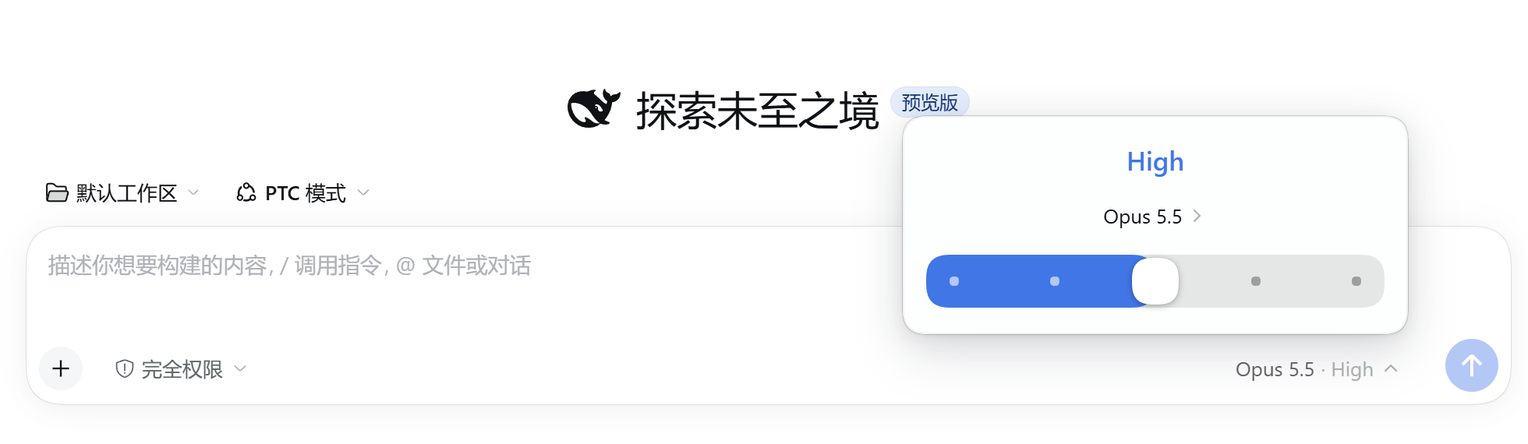
Three quick-switch chips left of the model button:

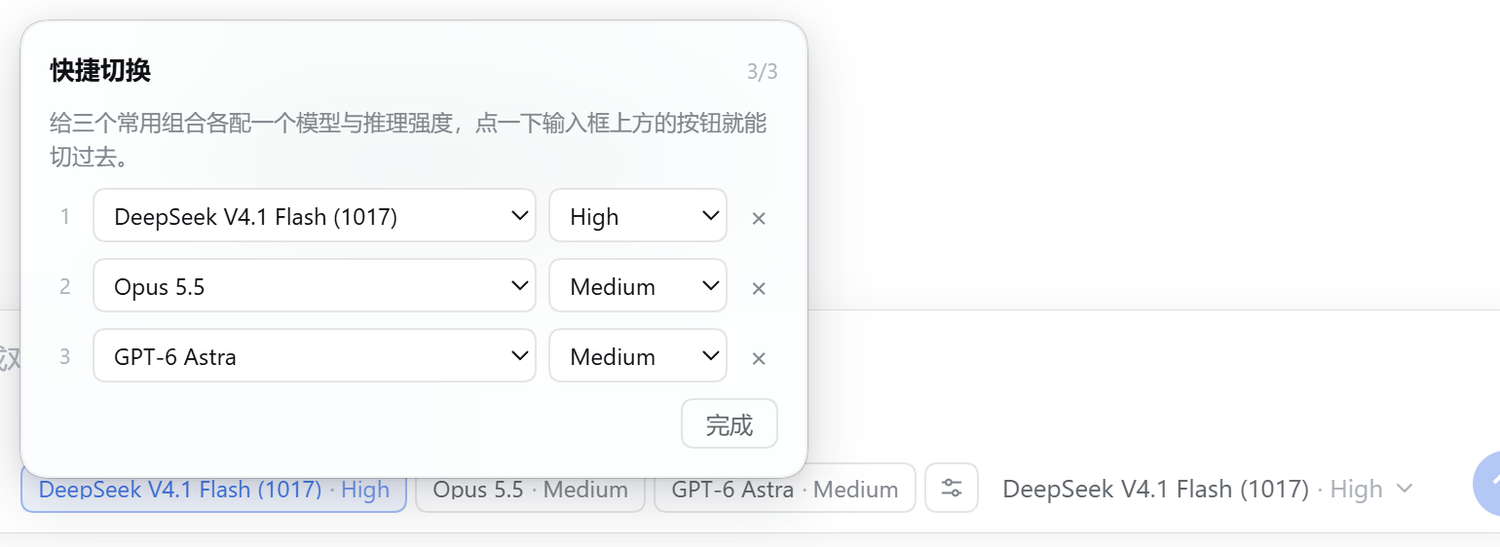
Configuring them in the plugin's own popover:
Features
- Codex-style card anchored above the composer model button, flipping below when there is no room.
- Draggable effort slider with one stop per effort the model actually advertises (
off,minimal,low,medium,high,xhigh,maxwhen advertised). The thumb snaps to whole stops, animates between them, and the effort label updates while you drag, not only after you release. - No provider-default stop. Levels come from the adapter's advertised
reasoning.efforts. A model without a stored effort showsmediumwhen available, otherwise its advertised default (or the middle level), never a synthetic "default" entry. Offstop when the model advertises it; committing it sendsreasoningEffort: "off", which providers like Codex map to "no reasoning".- Model list with provider grouping, the current selection, badges, loading and error states, and keyboard navigation.
- Quick switch: up to three saved model + effort pairs sit as chips in the composer tool row; one click switches both. The chips are configured in the plugin's own popover (the sliders button next to them), not hard-coded.
- Full keyboard support: arrows move one stop,
Home/Endjump to the ends,Escapecloses and returns focus. - Theme-aware: every color, radius and shadow comes from DSH theme tokens, light and dark.
- Chinese and English UI.
Requirements
- DeepSeek Harness
0.2.2-rc.1or newer (the client slot API it shadows was stabilized in this line). - A web profile (
dsh webor the desktop app).
Install
dsh plugin --profile web add github:caidows/dsh-quick-model-switch
Then reload the page. The plugin registers a client slot occupant at priority -1 on conversation.input.model, shadowing the shipped picker; disabling or removing the plugin restores the stock picker with no state left behind.
To install from a checkout, point dsh plugin add at the package directory instead.
Quick switch
The three chips left of the model button are one-click model + reasoning-effort pairs. Click the sliders button beside them to open the settings popover: each slot has a model select and an effort select (the effort list follows whichever model you pick). Slots store provider, model and effort, so a click switches the session to exactly that combination through session.selectModel.
The chips live in the browser's localStorage under codex-model-picker:quick-picks:v1, so they are per-profile rather than per-session, and they survive restarts. Clearing a slot in the popover removes its chip immediately.
How it works
cordis.patch.yml inserts one row, codex-model-picker, which loads the client bundle in client.js. The bundle renders into the composer's model slot and reads the same per-session model directory (ctx.modelDirectories.directoryFor(sessionId)) the shipped picker uses, so model switches and effort switches go through session.selectModel and stay in sync with the rest of the UI.
view.js and style.css are the sources; client.js is generated:
node build.mjs
License
MIT