dsh-decision-engine
leonhardthust/dsh-decision-engine
dsh-decision-engine: a cheap judgement layer for DeepSeek Harness — a small decision model answers structured questions before the main model acts, so calls can be allowed, escalated, rerouted to a cheaper model, or skipped. All eight decision points (too
Instalar
dsh plugin --profile web add github:leonhardthust/dsh-decision-engineREADME
dsh-decision-engine
Published fork: @leonhardthust/dsh-decision-engine. Based on the MIT-licensed upstream by zuosus. Do not enable both packages at once. See publishing and installation.
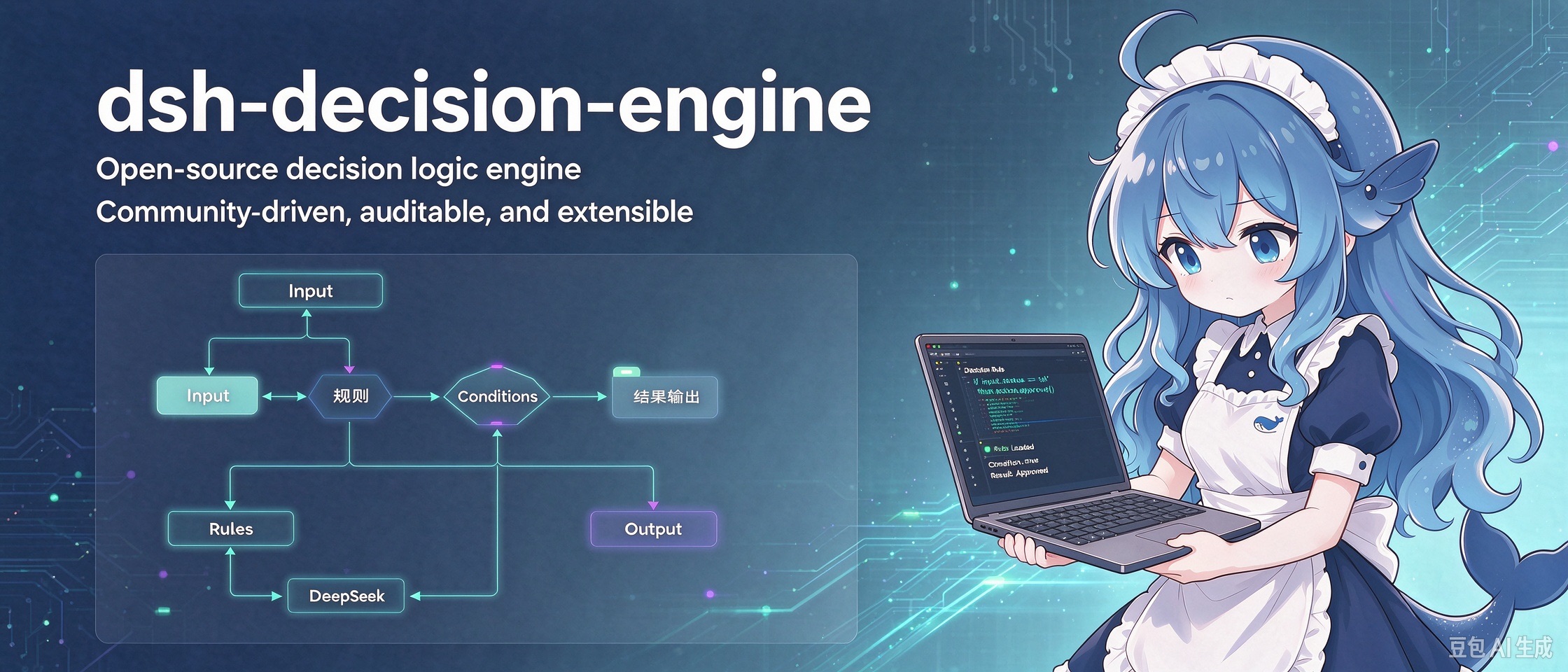
Free decision model usage provided
website · config.example.yml · DECISIONS.md
A judgement layer for DeepSeek Harness: a cheap decision model judges before the main model acts.
Privacy
This fork no longer includes anonymous usage reporting: no install IDs, installation events, or daily heartbeats are generated, and legacy analytics.json files are not read or updated. The old telemetryLevel / telemetryEndpoint settings have no effect. Local decision history and statistics remain available; user-configured decision-provider calls and the opt-in free-model configuration endpoint are unchanged.
Features
Eight decision points
- tool authorization
- model routing
- delegation
- compaction
- turn continuation
- retrieval necessity
- skill selection
- COT translation gate
Modes: off · observe · enforce
Providers: system one · bamboonode · 硅基流动 SiliconFlow (CN / Global) · Alibaba Bailian · TokenHub · Perplexity · OpenRouter · custom base URL
Safety level (how often to ask): Don't ask · Ask less · Default · Ask more (none of the four changes permission-mandated approval or denial)
UI: config page with collapsible sections · Decisions tab · stats · readable approval card · sharded decision logs (by date / session / workspace) with retention
| Config page | Decisions tab |
|---|---|
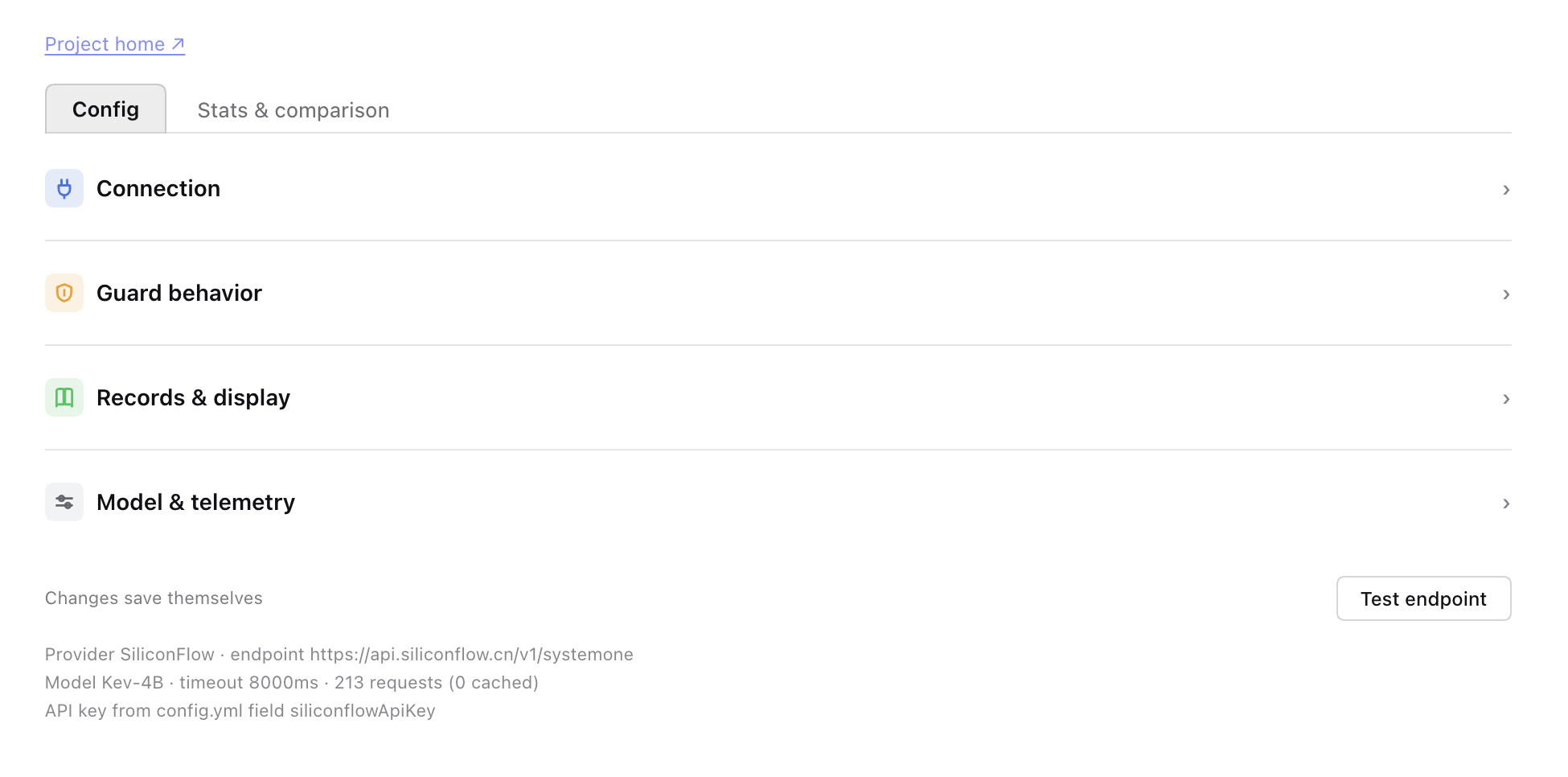 | 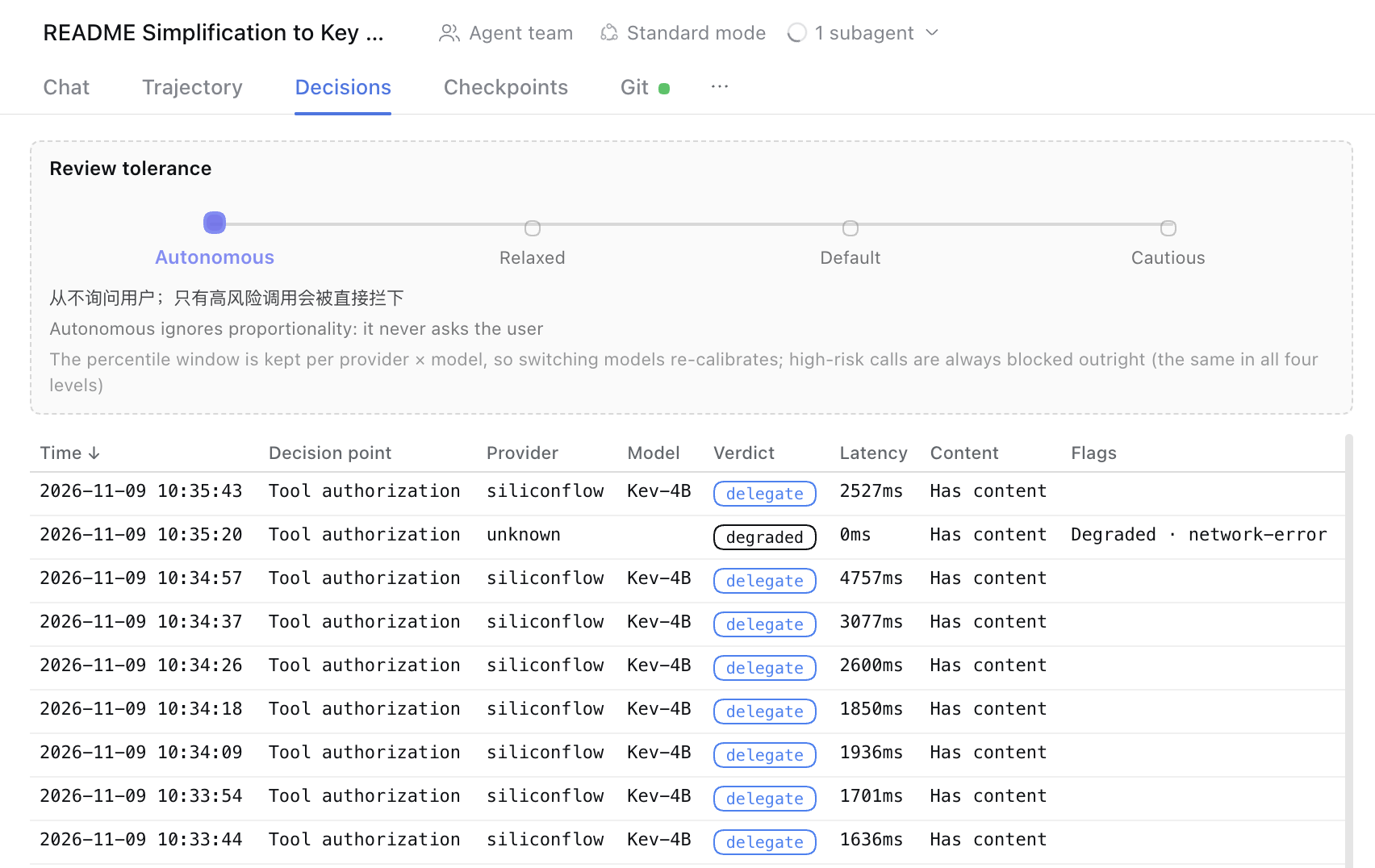 |
Screenshots predate the collapsible-section layout (DEC-051).
Token saving: exact cache · read-only tools bypass · state trimming
Safety layers: trusted host context → tool effects → mandatory permissions → model advisory → soft review tolerance → host outcome audit. Unknown high-impact calls fail closed; Auto still runs decision review. Soft asks use a selected host model (including reasoning effort), the session model, allow, or deny. Neither model review nor the allow fallback can replace mandatory approval.
See the security revision and verification notes. The plugin remains disabled by default; observation mode does not enforce protection.
License
MIT