dsh-plugin-remote
siberiah2o/dsh-plugin-remote
DSH Web 远程访问网关:登录鉴权 + 到本机服务的 HTTP/WebSocket 反向代理,无需 --trusted-host。
安装
dsh plugin --profile web add github:siberiah2o/dsh-plugin-remoteREADME
dsh-plugin-remote
Remote access gateway for the DeepSeek Harness (DSH) Web GUI — login auth + HTTP/WebSocket reverse proxy to the loopback DSH server.
中文 · MIT
Install
dsh plugin --profile web add dsh-plugin-remote && dsh web
Note: this is a DSH (DeepSeek Harness) plugin — install it into a profile through
dsh plugin(or the profile's dependencies) so the gateway activates; a plainnpm ialone does not wire it in.
Screenshots
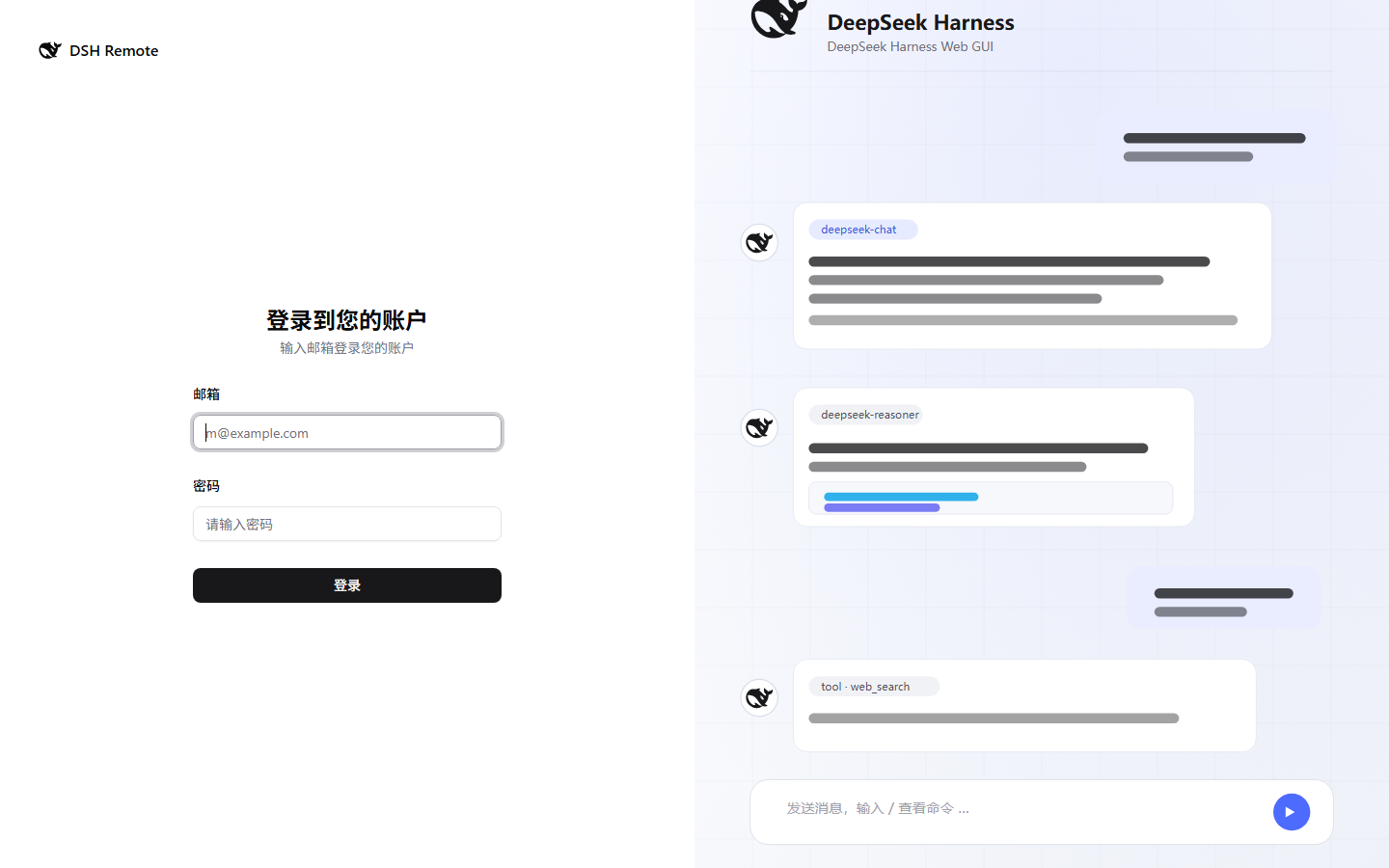
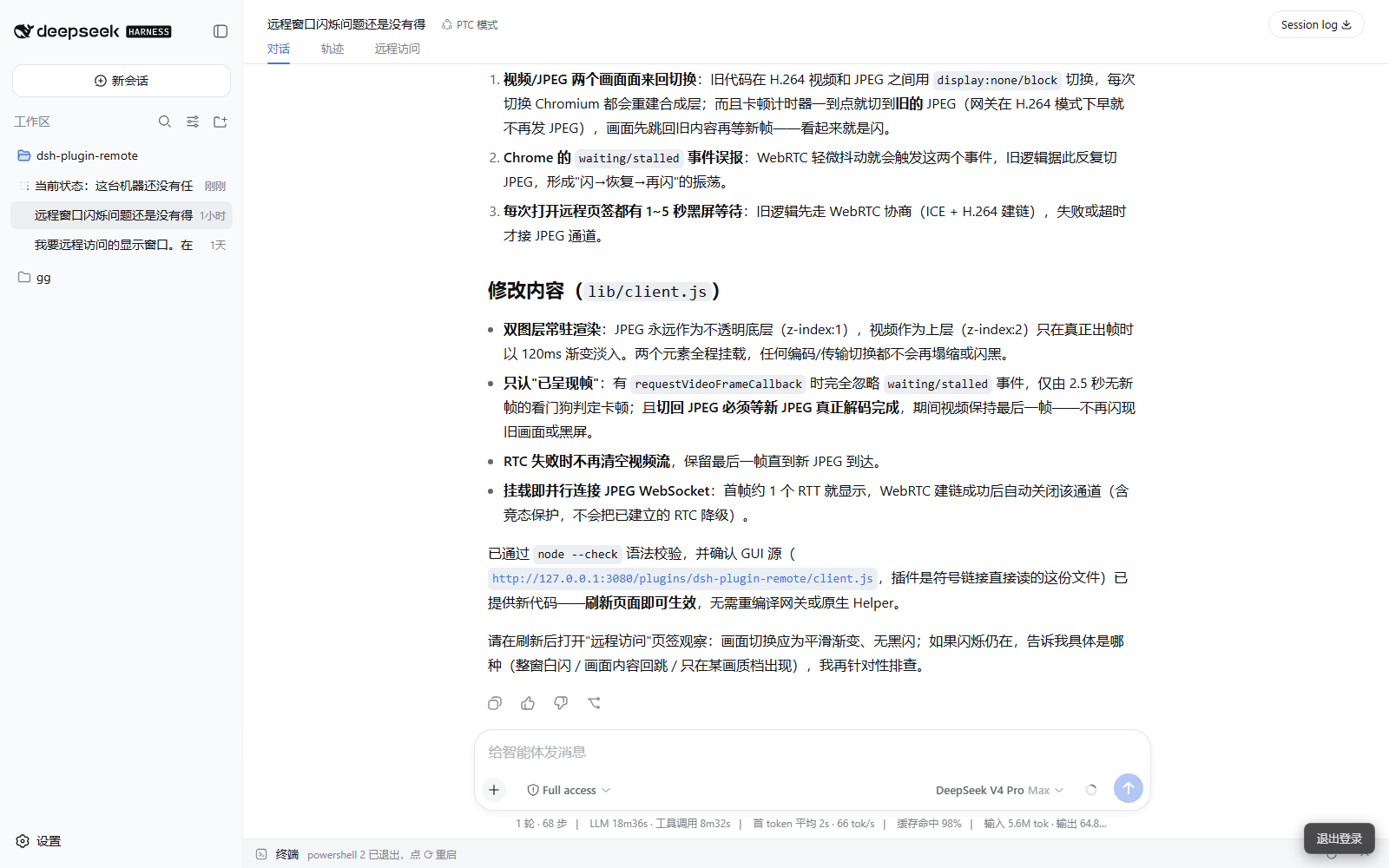
| Login | Main view (对话 / 轨迹 / 远程访问 tabs) |
|---|---|
 |  |
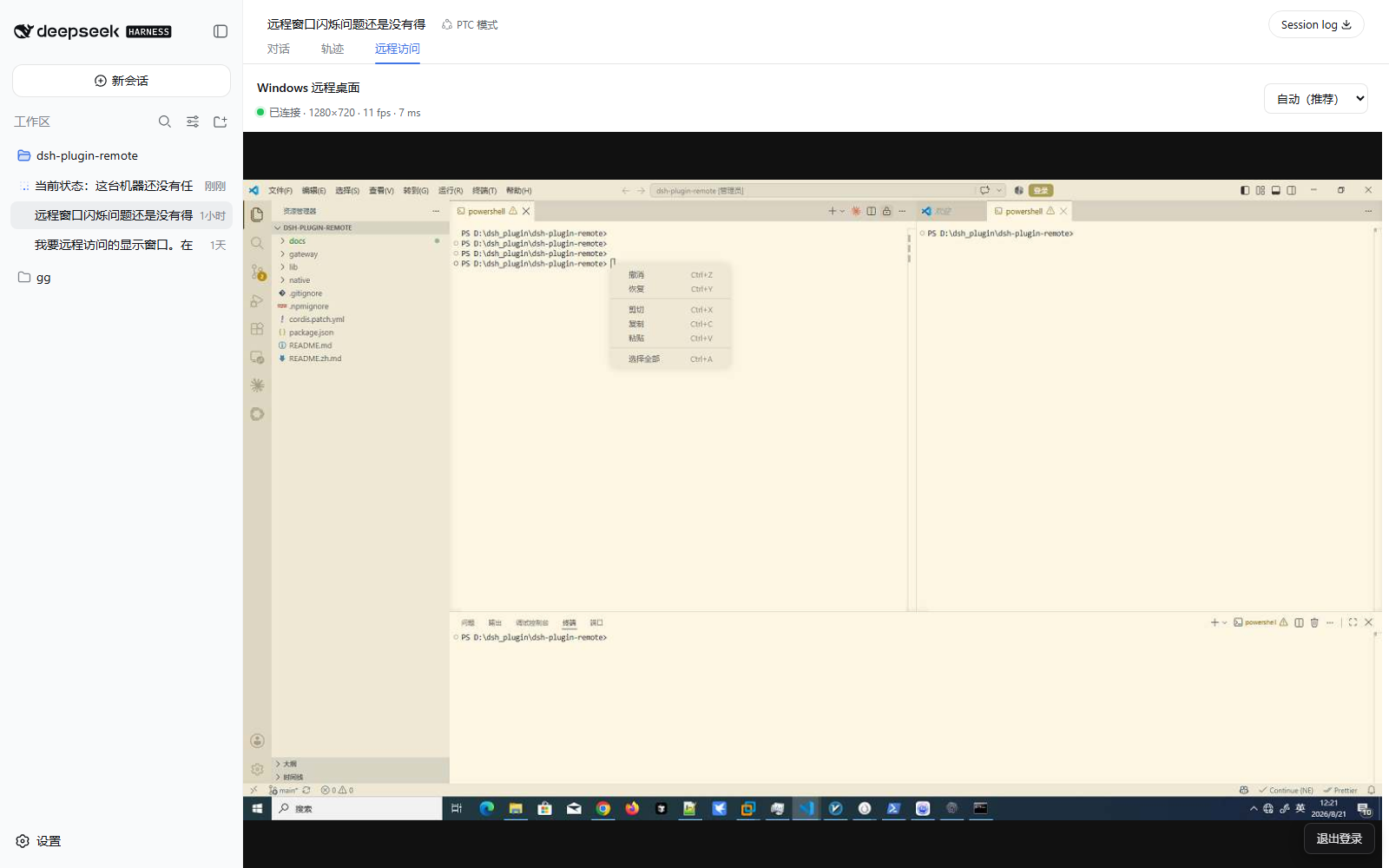
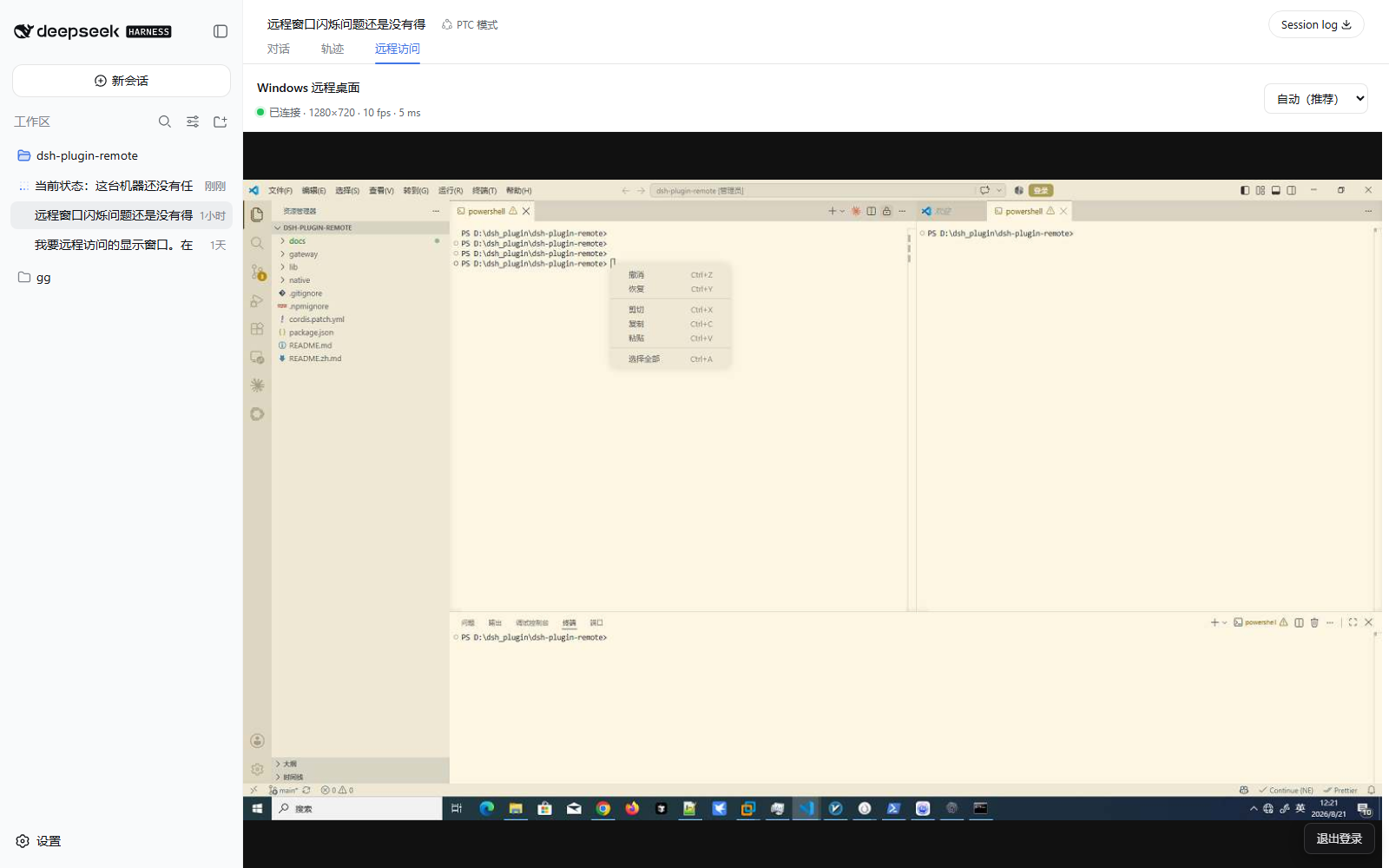
| Remote desktop tab | Settings → Remote Access |
|---|---|
 |  |
Features
- Login-gated remote access: scrypt credentials + HttpOnly session cookie; HTTP/WebSocket reverse proxy with Host/Origin rewriting — no
--trusted-hostneeded - White-themed login page (shadcn/ui, mobile-friendly) with the DeepSeek Harness brand
- Gateway admin API (
/admin/*, session-required), managed in the Settings → 远程访问 section:- Remote-access whitelist (IP / CIDR; loopback always allowed; hot-reloaded)
- Account password changes (old sessions revoked immediately)
- Request log: every request persisted to per-day JSONL shards, download + 1/3/7-day retention rules
- Localized zh/en, follows the GUI language
- Zero-install Windows desktop projection: the plugin starts its bundled x64 native helper automatically; no .NET, FFmpeg, driver, or separate agent installation is required
- Interactive remote desktop as a dedicated 远程访问 tab in the conversation view ring (next to 对话/轨迹), projecting the Windows desktop full-width with pointer input, keyboard input, and weak-network/balanced/sharp quality profiles. The primary WAN transport is WebRTC with independent lossy frame/pointer channels and a reliable control channel; the original WebSocket viewer remains an automatic fallback
- The gateway keeps its custom HTTP/WebSocket plumbing on Node built-ins; the
optional native
node-datachannelpackage provides the WebRTC fast path and the Next.js login app lives insidegateway/
Usage
- Open
http://<server-ip>:4080— the first visit creates the only account - Manage accounts:
node lib/remote-passwd.mjs add|set-password|list|del <username> - Data lives under
$DSH_HOME/plugin-data/dsh-plugin-remote/(users.json,whitelist.json,logs/)
Windows desktop
On Windows 10/11 x64, the plugin launches native/windows-x64/dsh-remote-host.exe
after the gateway becomes ready. It connects back with a random process-local
authentication token that is never written to disk. Only logged-in gateway
users can open the viewer/control channel.
The current Windows helper source has two video paths. After native:build,
the primary path captures BGRA frames, encodes H.264 through Media Foundation,
and sends one access unit into a real WebRTC H.264/RTP track. The browser and
libdatachannel then use the media transport's pacing, congestion feedback,
NACKs, and keyframe requests instead of putting every full frame into a TCP
queue. During startup or when H.264 cannot be decoded, the gateway keeps the
JPEG DataChannel path alive and switches to it automatically; the authenticated
WebSocket viewer is the final compatibility fallback. The package prefers the
dsh-remote-host-h264.exe binary when present and keeps the old exe as a legacy
fallback; npm run native:build refreshes both copies.
Pointer motion and wheel events use a disposable low-latency channel, while keyboard, button transitions, ACKs, and input-reset messages remain ordered and reliable. This prevents stale video from blocking new input on a weak link.
For clients behind symmetric NAT or UDP-restricted networks, configure a TURN
server in the plugin row. The values use the browser RTCConfiguration shape:
{
  rtcIceServers: [
    'stun:stun.example.net:3478',
    { urls: 'turns:turn.example.net:5349', username: 'user', credential: 'secret' },
  ],
}
STUN is useful for direct paths; TURN is the reliable relay fallback. Keep the WebSocket fallback enabled when deploying in environments where UDP policy is unknown.
Windows secure desktops (UAC prompts, sign-in, and locked sessions) cannot be
captured or controlled. Set config.desktop: false to disable projection.
Development verification
npm run native:build
npm run gateway:build
npm run test:desktop
License
MIT