dsh-any-background
tkingxiao/dsh-any-background
DeepSeek Harness 外观一体化工具。对 8 个界面区域分别调节透明度与毛玻璃模糊(主背景、侧边栏、卡片面板、输入框与控件、设置面板、对话文本框、轨迹页、产出物/高亮内容;安装 dsh-better-sidebar 后为 9 个)。用任意图片或视频做壁纸,配有拖动平移、滚轮缩放的位置编辑器与 5 种布局模式(适应/填充/拉伸/平铺/居中);视频静音循环播放、刷新不丢失,并自动截取一帧用于预览、取色与构图。把多张图片加入轮换池(随机/顺序,每次刷新/每天/每周)自动更换。还包含 PS 风格色轮、一键从壁纸提取主题色、6 套预设 + 命名配置、昼夜自动切换与主题一键导出导入。
安装
dsh plugin --profile web add github:tkingxiao/dsh-any-backgroundREADME
dsh-any-background






English | 中文
A DeepSeek Harness appearance plugin: custom theme color, background wallpaper (image / video / algorithmically generated), and fine-grained per-surface opacity & blur controls. Compatible with DSH 0.1.5-rc.2 through the whole 0.1.7 line below 0.2.0, plus 0.2.0-rc.1 (official-Sidebar UI such as the "Theme" card enables itself where the host exposes the Sidebar registry extension point, and is skipped silently where it does not).
Screenshots
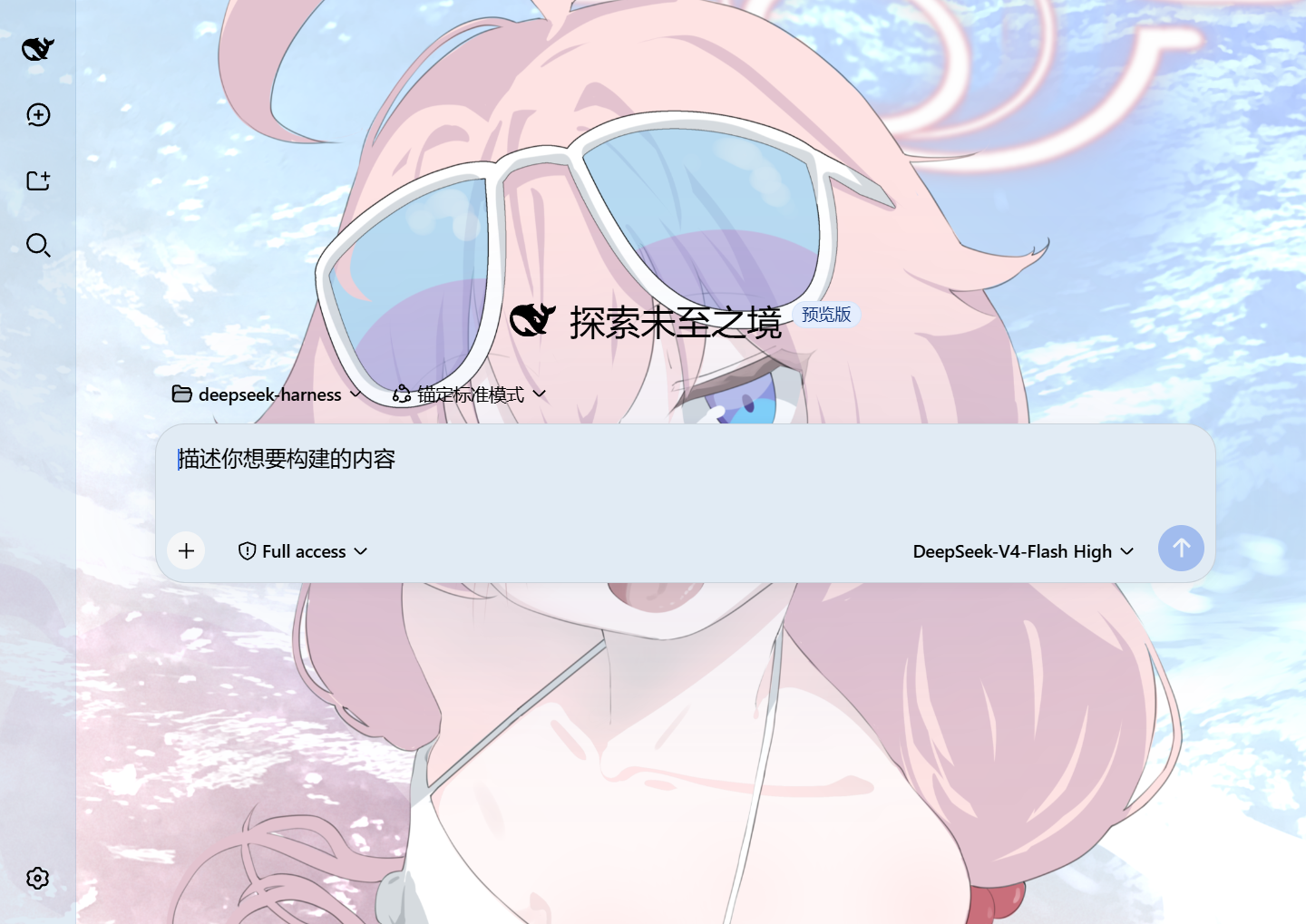
Custom homepage · wallpaper + theme color applied
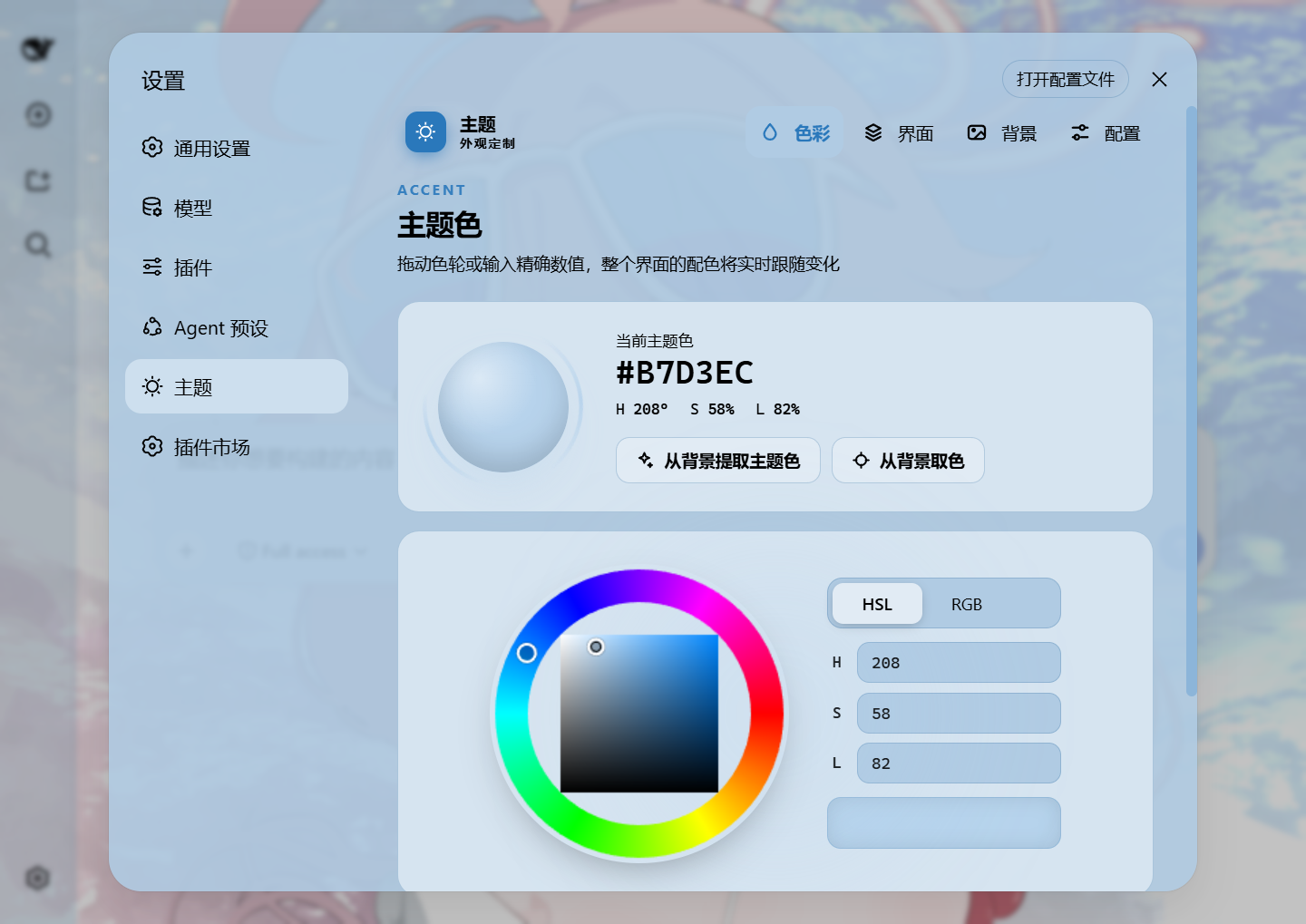
Theme color picker · PS-style wheel + precise HSL/RGB inputs
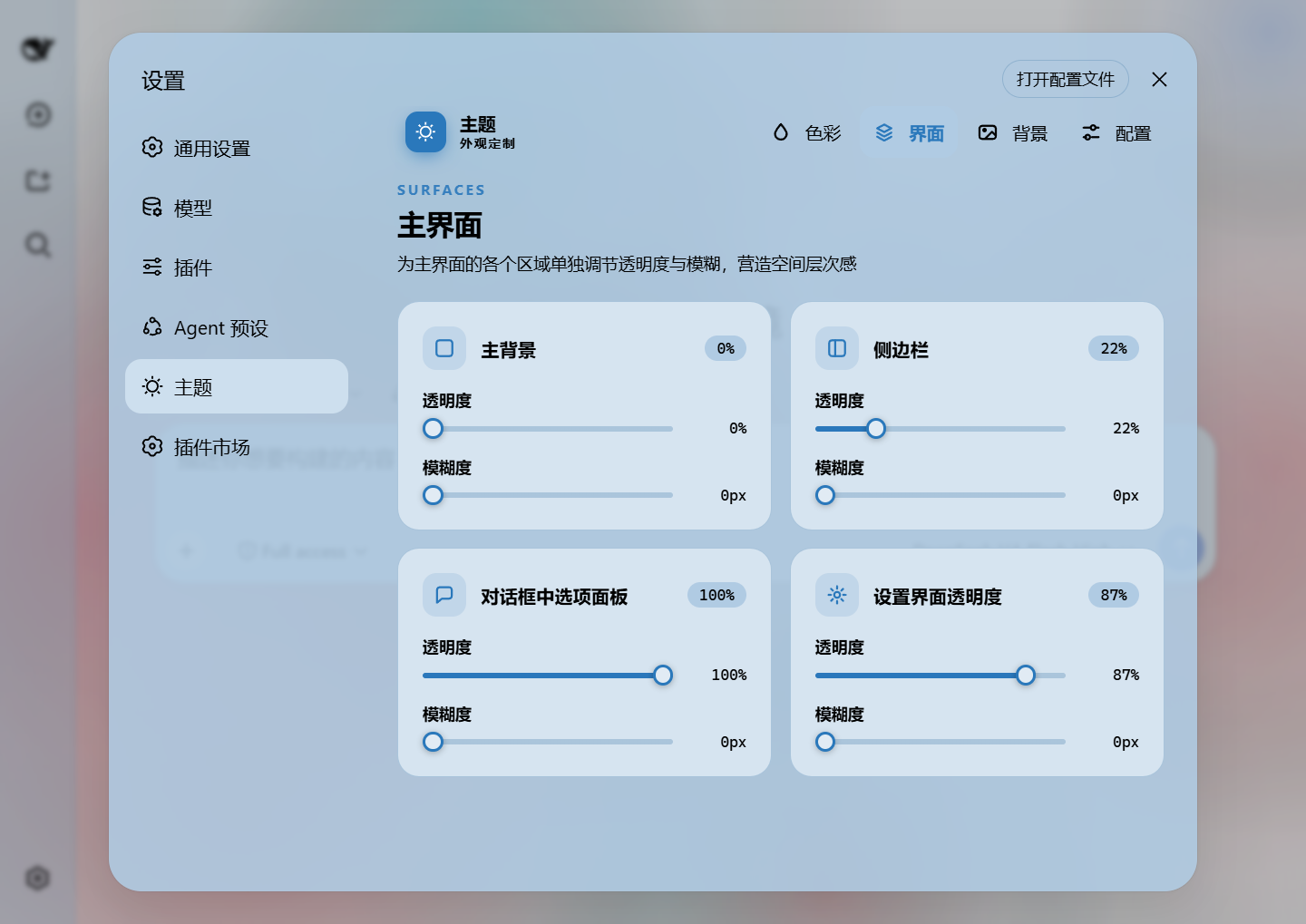
Per-part opacity and blur · main background, sidebar, cards, settings
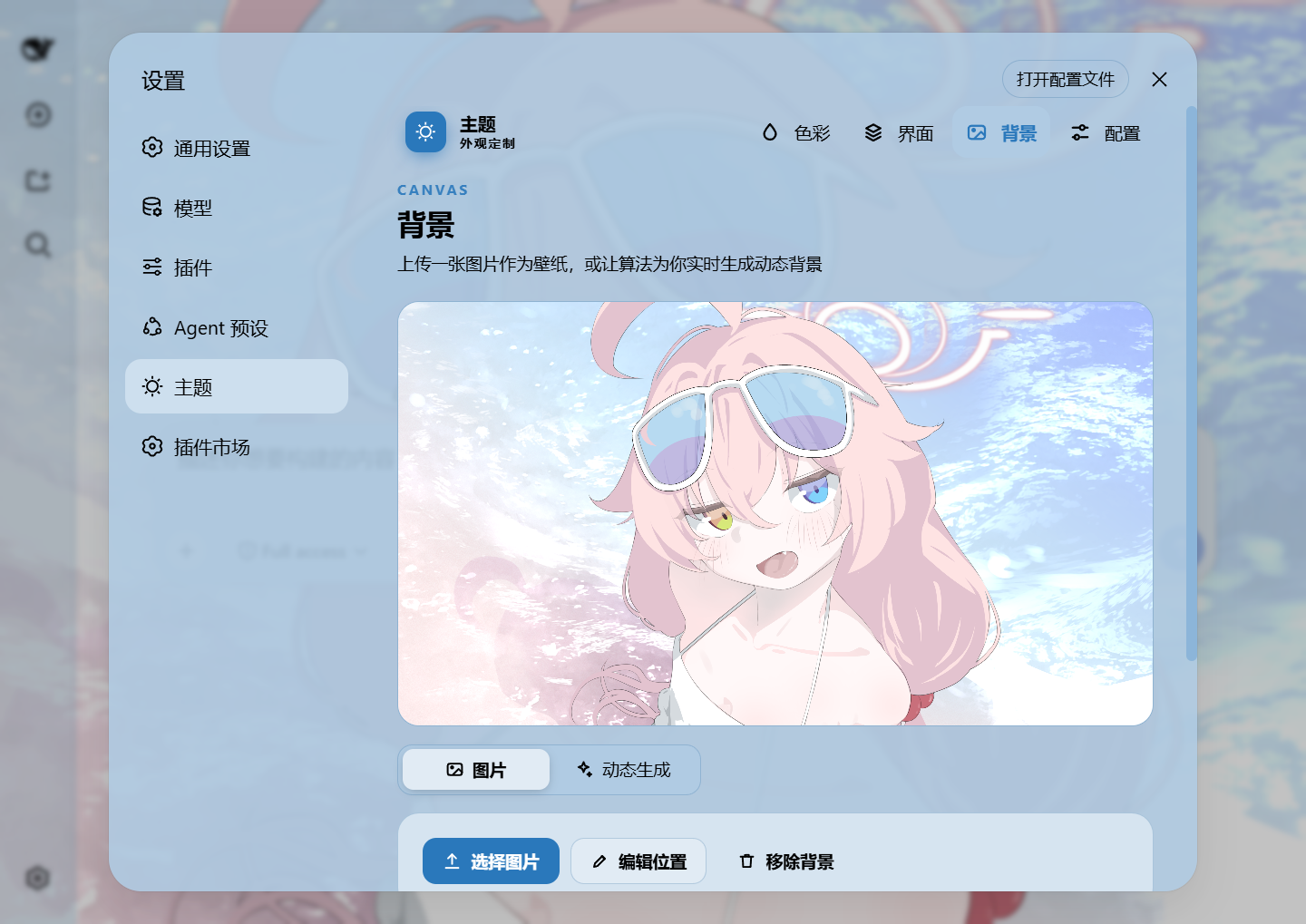
Background editor · image/video wallpapers support drag-to-pan and scroll-to-zoom
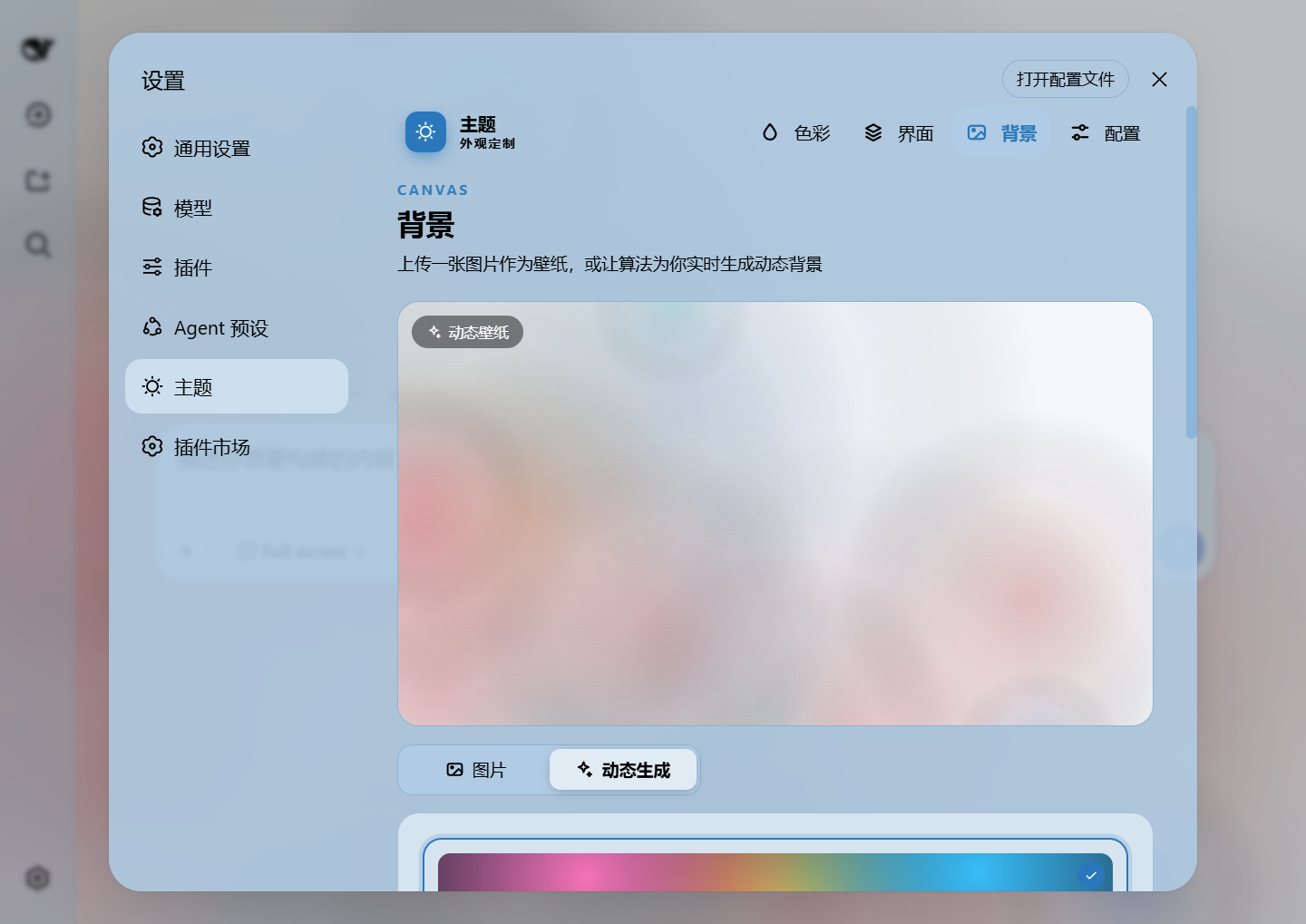
Generated dynamic background · mesh gradient / Shader / geometric presets
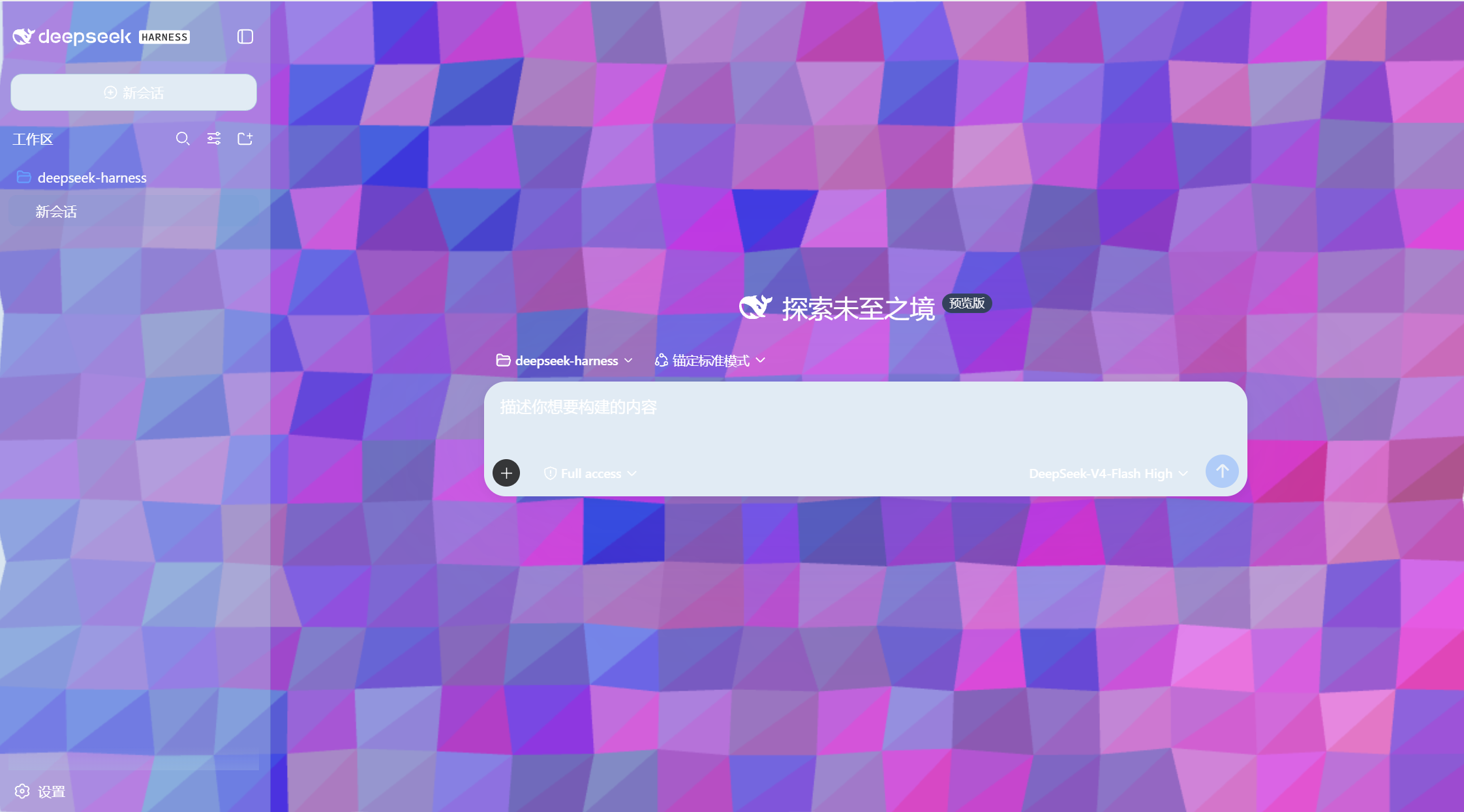
Generated dynamic background · geometric low-poly mode preview
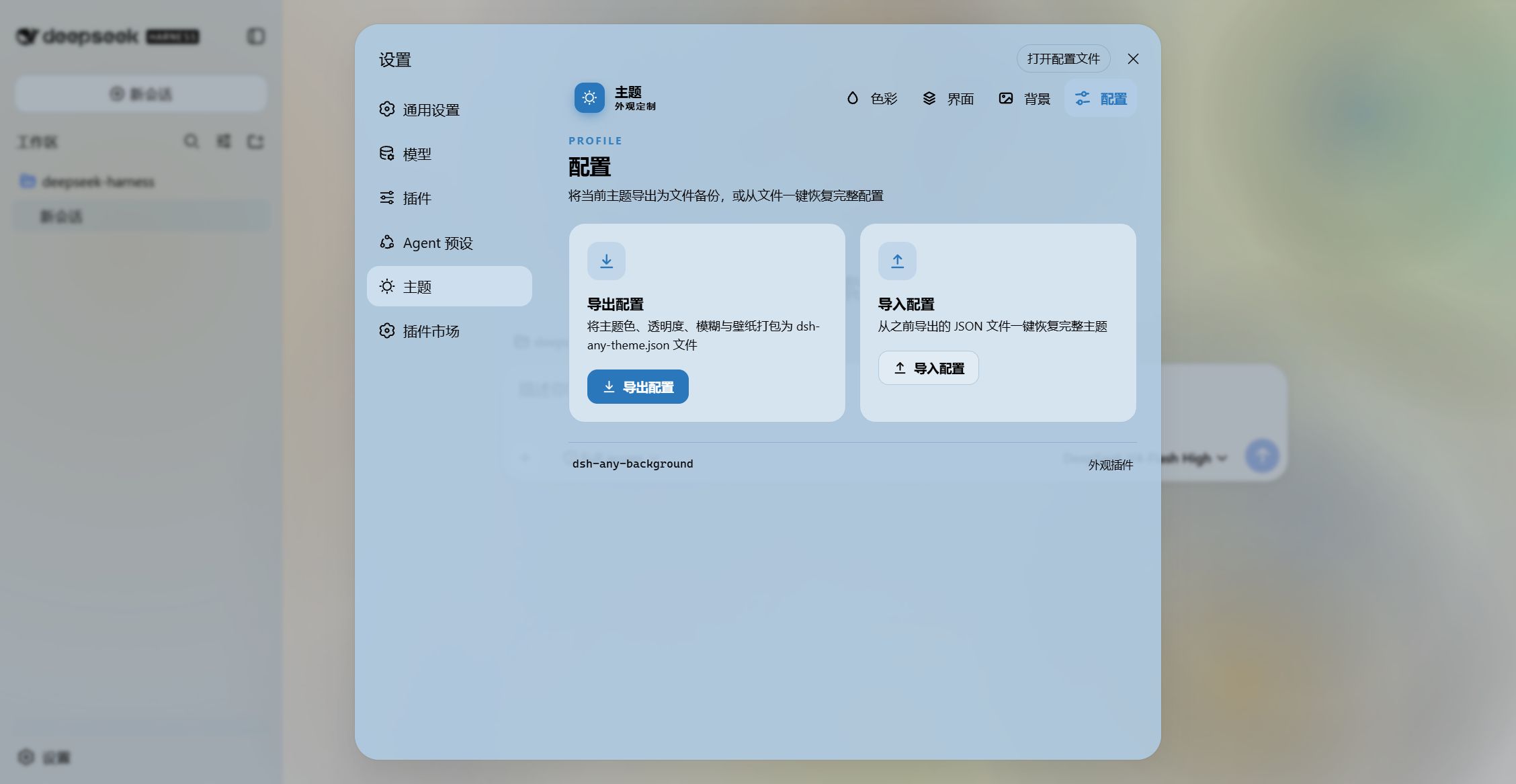
Export and import configs to share
Features
- PS-style Color Wheel — Pick hue on the ring, adjust saturation & lightness in the inscribed square. Generates 30+ CSS design tokens in real time.
- Precise HSL / RGB Input — Enter exact color values numerically with instant bidirectional sync to the wheel.
- Smart Color Extraction — One click derives a theme color from your wallpaper by sampling the visible region, quantizing, and filtering out gray / near-black / near-white pixels. Video wallpapers contribute via an auto-captured frame. Fully client-side.
- Eyedropper — Hover the wallpaper to preview a color and click to pick it as the theme color.
- Background Wallpaper — Upload any image as your wallpaper. Drag to pan and scroll to zoom inside a viewport-proportional editor (one finger to pan, two to pinch-zoom on touchscreens).
- Video Wallpaper — Use a video as a live wallpaper: muted looping playback that survives refreshes (file persistence + HTTP streaming with Range seek), with an auto-captured frame powering the preview, theme-color extraction, and the position editor.
- Position Editor — One shared editor for images and videos: drag to pan, scroll or pinch to zoom, one-click reset. Image and video placements are stored separately and never overwrite each other.
- Layout Modes — Fit / Fill / Stretch / Tile / Center for both images and videos; in Fit mode the editor-committed framing stays consistent across window resizes and cross-monitor moves.
- Generated Dynamic Backgrounds — Choose mesh gradient, Shader, or geometric patterns with adjustable spread, intensity, and seed locking.
- Per-surface Interface Opacity — Independent sliders for the main background, sidebar, cards & panels (including the dropdowns and menus around the dialog), the input & controls (composer box, Cordis panel), the settings panel, the conversation text frame, the trajectory view, the right sidebar (or bettersidebar), produced / highlighted content, and the header popovers (Agent Team panel, background-job list and the session-header dropdowns).
- Per-surface Interface Blur — Frosted-glass
backdrop-filterblur (0–60 px) per surface, including a real backdrop on the composer, the Cordis panel and popover surfaces via stable host selectors. - Produced / Highlights — Code blocks in conversation content (with their language banner), inline
codehighlight chips and produced chips share one opacity + blur slider. The opacity is the alpha of each surface's own background color (no second color stacked on top of the original), and the blur frosts that same layer so the wallpaper shows through the content. - Right sidebar / bettersidebar surface — One slider pair (
panelOpacity/blurs.panel), two identities: without dsh-better-sidebar it reads "右方侧边栏" (Right sidebar) and drives the official right Sidebar's surface tokens and frosted blur (works on 0.1.5-rc.2 through 0.1.7); with dsh-better-sidebar installed it reads "bettersidebar" and takes over that plugin's bottom workbench panel (the official sidebar keeps responding too). The row is always visible. - Header popovers — The session-header dropdowns get their own opacity + blur pair: the Agent Team panel, the background-job list, the open-in-app / session-log menus and the subagent lineage tree. On 0.1.7 the open-in-app picker moved to a portal and the session-row menu became a dynamic slot, so the plugin observes the stable
conversation.session.header*slot anchors and tags the open popover at runtime instead of relying on class shapes. - Sidebar "Theme" page (dual mode) — The same five pages (Color / Interface / Font / Background / Profiles) register into two surfaces: without dsh-better-sidebar, a "Theme" card is contributed to the official right Sidebar's guide page through its public extension points (
sidebarRightTabs+ thesidebar.right.pane.tabkeyed seat); with dsh-better-sidebar installed, the page registers in that plugin's sidebar instead and the official guide card withdraws itself, so the two never duplicate. Settings panel, official sidebar and better-sidebar all share one page implementation and one state store — a change in any of them shows up everywhere. The shell adapts to the panel width, and a narrow panel tightens padding and falls back to a single column. On a host without the right Sidebar the registration silently never happens. - Conversation View Cards — The message list is wrapped in a translucent card automatically, and the trajectory page gets whole-page opacity & blur controls, letting the wallpaper shine through the content.
- Theme Export / Import — One-click export to a self-contained
dsh-any-theme.json(config + wallpaper, video embedded as a data URL) and import to restore it anywhere. - Appearance Presets & Profiles — Six one-click presets (Default / Frosted glass / Minimal / Midnight / Cyber / Warm daylight) plus named profiles: save the current look and re-apply it anytime. A two-step confirm guards deletion.
- Wallpaper Rotation — Add images to a rotation pool (thumbnail picker included) and let the wallpaper change by shuffle or order on every refresh, daily, or weekly. Advancing copies the chosen image into the active wallpaper slot, so export/import and color extraction keep working unchanged.
- Day/Night Auto Switch — Assign a day profile and a night profile; the plugin switches automatically at fixed clock times or by following the OS dark mode.
- Custom Font — Upload a ttf / otf / woff / woff2 file (up to 100 MB) and apply it to the whole interface through
@font-face; toggle it off or remove it at any time. Fonts stream as raw bytes and persist in the plugin data dir; code blocks keep their monospace stack. - Per-part Text Outline — The same surface groups as the interface page (now ten, including the header popovers), each with its own
-webkit-text-stroke: width 0–4 px (0 = off) and a color of auto-contrast / gray / black / white / accent / custom. Code blocks, inlinecode, icons and the host'sbackground-clip: textshimmer chrome (the "深度求索中" turn-status line and the turn-process rows) are exempted automatically, so multi-color syntax never smears and gradient text is never flattened into a stroke-coloured blob. - Forced Interface Scheme — Force light or dark token palettes regardless of the accent color's lightness; in
Autoboth the surface and font directions follow the accent's lightness (dark pick → light fonts, light pick → dark fonts), falling back to the wallpaper's perceived brightness when no color is picked. - File-based Persistence — All settings are stored on the filesystem under
~/.dsh/.dsh-any-background-data/, notlocalStorage. - Bilingual — Full Chinese / English UI with automatic locale detection.
- Theme Watchdog — Re-asserts the custom theme if the host resets it.
Changelog (latest two releases)
v0.3.3 (Menu paint per release, DSH 0.2.0-rc.1 supported)
- The card and header sliders drive menus on
0.1.7-rc.2again. That build moved a menu's fill and frost onto a child layer and turned--dsw-specific-menuinto an alias, so the token the plugin had always been writing was no longer read by anything on a menu. Which tokens a menu paints from, and which layer does the frosting, is now a fact each version folder supplies instead of an assumption baked into shared code. - DSH
0.2.0-rc.1is supported — checked at the tag, then given its own folder and channel. The manifest names that one build rather than opening the whole 0.2.0 line: a release nobody diffed is a different host. - Shimmer text survives the 0.2.0 rewrite: the outline exemption gained
[data-shimmer], so the activity line is no longer drawn as two stacked copies. - The plugin page's loading skeleton gets the same frosted card as the list it stands in for.
- Installing on a 0.2.0 host needs a
dsh webrestart: since0.1.7-rc.1the host decides whether a plugin loads from its peer ranges, and a release it does not name is disabled before a single module is imported.
v0.3.2 (Produced artifacts fully bound, 0.1.7-rc.2 loads again)
- The produced slider now covers every artifact 0.1.7 renders: tool-detail cards, turn-event rows, diff blocks, the changed-files card, inline
codefrost and the hover preview window — that last one portals its card to<body>, which is why no slider reached it before. - Code-card headers follow the theme again instead of staying a pale slab that ignored the slider.
- dsh-better-sidebar's workbench now belongs to the produced slider; the panel row means only the host's own right Sidebar.
- One artifact card no longer answers to two sliders — its root reads the produced slider's own raw layer token.
- The composer stops carrying a stacking context once its blur returns to 0.
- antd confirm dialogs are no longer mistaken for the settings panel: they inherited its surface colour, frost and outline group, because the old selector only asked for the three ARIA attributes antd also emits.
0.1.7-rc.2loads again, and later 0.1.x builds with it:engines.dsh, the seven@deepseek-ai/dsh-*peers anddsh.compatibilitynow close with|| 0.1.7-rc.2 || >=0.1.7-alpha.1 <0.2.0-alpha.0— a bare>=0.1.7would match no prerelease build at all.
Installation
Method 1: npm install (Recommended)
# published on the npm registry
dsh plugin --profile web add dsh-any-background

# or straight from the GitHub repository
dsh plugin --profile web add github:Tkingxiao/dsh-any-background
Then launch:
dsh web
The plugin appears as a "Theme" section in Settings.
Method 2: npx (No Global Install)
npx @deepseek-ai/dsh plugin --profile web add dsh-any-background
npx @deepseek-ai/dsh web
Method 3: Local Build (Development)
The lib/ directory is committed, so installs need no build step. To rebuild after editing src/:
git clone https://github.com/Tkingxiao/dsh-any-background.git
cd dsh-any-background
pnpm install
pnpm run bundle
pnpm dsh plugin --profile web add "dsh-any-background"
pnpm dsh web
Compatibility
dsh web0.1.5-rc.2 ~ <0.2.0, plus0.2.0-rc.1—engines.dsh, the seven@deepseek-ai/dsh-*peerDependenciesanddsh.compatibility.dshlist the0.1.5-rcand0.1.6-alphabuilds this plugin has been checked against one by one, close that part of the range with>=0.1.7-alpha.1 <0.2.0-alpha.0so every 0.1.7 release loads, and then name0.2.0-rc.1on its own — the umbrella stops below 0.2.0 deliberately, because a 0.2.0 build this plugin has not diffed is a different host and its facts belong in their own folder.0.1.7-rc.1/0.1.7-rc.2and0.2.0-rc.1were checked by diffing their tags, the builds before them hands-on. From0.1.7-rc.1the host itself enforces that peer list — a release the ranges do not name is disabled before its modules are imported — so naming it is what makes the plugin load, not documentation; the declarations indsh.compatibility.dshReleasesrecord which builds were checked. That enforcement is also why a machine already on 0.2.0 needs a plugin release (or a manual exact-version exemption) and a host restart: the check runs while the profile is composed, not when the plugin is updated. The host release is resolved on the Node half at runtime, and features that depend on a specific host release channel (the right Sidebar's panel blur, the official Sidebar's "Theme" card) enable themselves only where the corresponding host structure exists; everything else behaves identically across the range.- Isolated per-version adaptation: the release is resolved on the Node half from the app manifest the process was composed from (
ctx.profileContext.installAnchor, with the launcher's on-disk layout behind it — the client context exposes no version) and, once handed down through thereadRPC, is routed only by the front-layer adapter —src/host-compat/detects and buckets channels, whilesrc/client/host-compat/versions/holds one folder per release (v0-1-5-rc-2-3/v0-1-6-alpha-1-2/v0-1-7-alpha-1-2-rc-1/v0-1-7-rc-2/v0-2-0-rc-1/unknown), each describing that version's panel mechanics, header slot keys, plugin-page shape and where a menu's paint lives. Base code just asks the adapter questions (who owns the guide surface, which layer carries the blur, which token fades a menu) and never compares version strings. Another build on a verified patch line (0.1.6-alpha.4against a table checked atalpha.2) keeps that line's adapter, and a patch line nothing was checked against clamps to the nearest one with a log line saying so. Only a release that will not parse at all falls intounknownand probes the DOM shape instead of guessing (:has()dual arms); supporting a new host means adding one folder and registering it. - DSHA — DeepSeek Harness Android launcher (ROOT-free, Termux-free). Its bundled
dshis0.1.5-rc.2, inside the supported range; the mobile UI shell is provided bydsh-web-mobile. - deepseek-harness-desktop — Supported
Permissions, side effects & boundaries
- Integration form: official Profile Bundle —
package.jsondeclaresdsh.bundle.patch: ./cordis.patch.yml(a loader insert layer), the repository ships prebuilt runtime artifacts ready to use (lib/index.js,lib/invariant.js,lib/client.js), and there are no install scripts, nopostinstall, no native binaries, and no build step at install time. - Filesystem: the server half reads and writes only inside
<dsh home>/.dsh-any-background-data/(config JSON, wallpaper, rotation pool, video, font) and touches nothing outside it; config writes are atomic (temp file + rename). These files live on the real disk, so they are outside generation restore — it neither captures nor rolls them back; deleting the directory is a full plugin reset. - Network: one outbound fetch happens only when the user pastes an http/https image or video URL and presses Apply; no telemetry, no other external calls.
- Shell / native: none. No
child_process, no native modules, no dynamically downloaded executables. - HTTP surface: registers only
/dsh-any-background/{video,wallpaper,font}(GET/HEAD streaming) with matching*/uploadPOST routes (100 MB cap) and the dedicated RPC channel/dsh-any-backgroundunder the local dsh web server; no extra listening ports. - Restart requirements: the first install needs a (re)start of
dsh webto load the client bundle; settings changes afterwards apply live and persist automatically. Updating the plugin requires a restart to pick up the newlib/client.js. - Tests & verification:
pnpm run typecheck(full tsc check) andpnpm run bundle(tsdown emitslib/); no automated unit tests — behavior is verified manually. - Known limitations: the styling relies on stable host DOM markers (
[data-sidebar-right-panel],[data-dsh-bottom-panel], …) and CSS token names; a host restyle of those layers can leave a slider ineffective for its surface (cosmetic only — nothing breaks). The version-specific half of those selectors lives inside its own version folder, so a host revision normally means editing that one file.-webkit-text-strokemay clip about 1px at the edge of some single-line ellipsis containers.
Star History
License
MIT