blue (blue)
dsh-blue/blue/packages/bundle/blue
插件树式终端界面:流式 markdown 会话流、工具卡片、模糊命令补全与主题热切换,每个界面组件都是可热替换的 Cordis 插件。
安装
dsh plugin --profile web add github:dsh-blue/blue该插件位于仓库的 packages/bundle/blue 子路径下。
README
Blue






English | 中文
Blue is an interactive terminal UI for
DeepSeek Harness (dsh).
It is an out-of-tree Cordis bundle over dsh-base, built against Harness
0.1.2-alpha.3. Blue 0.2.0-alpha.1 deliberately uses the same plugin
model as dsh Web: plugins are ordinary Cordis siblings and consume native dsh
services directly.
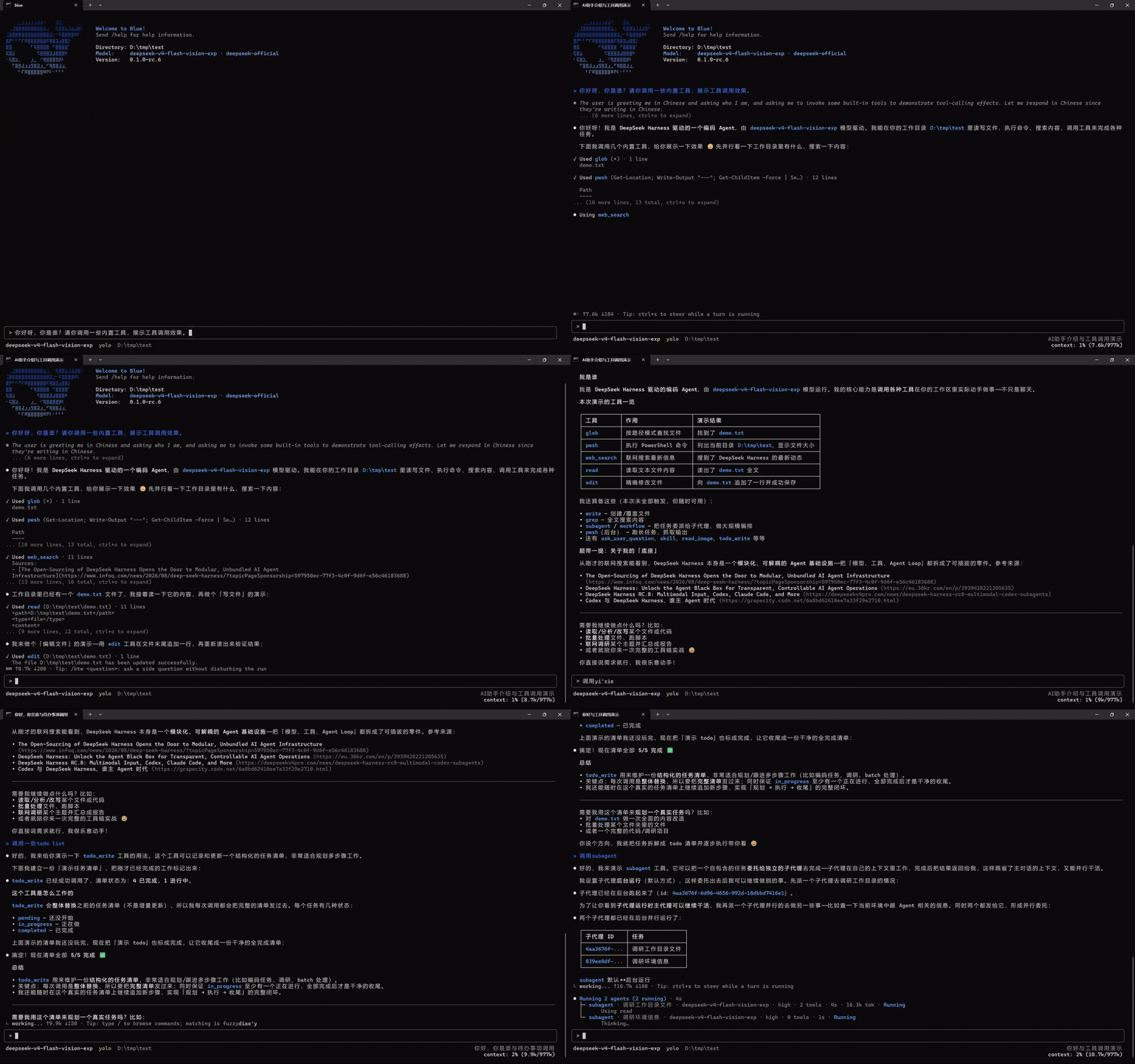
Blue renders Markdown tables, closed Mermaid fences in assistant messages, and renderer-neutral line, point, bar, sparkline, and heatmap nodes directly in the terminal, with width-safe source or text fallbacks.
Plugin model
A plugin declares the services it needs with inject, then uses them from its
Cordis context:
ctx.commands,ctx.sessionProjections,ctx.tools, and the rest of the documented dsh services are used directly.ctx.bluePanes,ctx.blueStatus,ctx.blueOverlays, andctx.blueEditorExtensionsare the only Blue-specific UI contribution services.ctx.blueCurrentAgent.current()returns the exact Agent selected by this Blue frontend when an Agent-scoped native service needs it.- Every registration belongs to the caller's Cordis Fiber. Unloading the plugin removes its commands and UI contributions.
There is no Blue plugin manifest, capability negotiation, adapter facade, private plugin realm, or separate plugin-author CLI. Blue's own features and external plugins register through the same services.
Plugins always return ordinary renderer-neutral nodes. Blue automatically
windows large list nodes and delays hidden responsive branches, so plugins
do not manage viewport ranges, overscan, renderer caches, or scroll
controllers. Plugins still own database and network fetching.
import type { Context } from '@deepseek-ai/cordis'
import type {} from '@deepseek-ai/dsh-commands'
import type {} from '@dsh-blue/blue-api'
import { ui } from '@dsh-blue/blue-ui'

export const name = '@acme/build-health'
export const inject = ['commands', 'bluePanes']

export function apply(ctx: Context): void {
  ctx.commands.register({
    name: 'health',
    description: 'Show build health',
    handler: () => ({ kind: 'success', text: 'healthy' }),
  })
  ctx.bluePanes.register({
    id: 'acme.build-health',
    placement: 'right',
    narrow: 'bottom',
    render: () => ui.text('healthy'),
  })
}
Usage
Prerequisites are Node ^22.19 || >=24 and pnpm 11.
npm i -g @deepseek-ai/dsh
dsh plugin --profile blue add @dsh-blue/blue@alpha
dsh --profile blue
Or install the standalone launcher, which includes the tested dsh runtime:
npm i -g @dsh-blue/blue-cli@alpha
blue
Set DEEPSEEK_API_KEY before first run. /help lists the active commands
and key bindings.
Architecture
flowchart TB
    ROOT["one dsh process · one Cordis service graph"]
    DSH["native dsh services<br/>commands · sessionProjections · tools · agents"]
    PLUGIN["ordinary Cordis plugins<br/>official Blue rows and external siblings"]
    AGENT["blueCurrentAgent<br/>exact selected Agent"]
    UI["direct Blue UI services<br/>bluePanes · blueStatus<br/>blueOverlays · blueEditorExtensions"]
    CORE["blue-core renderer<br/>only pi-tui and raw-terminal owner"]
    TERM["terminal"]

    ROOT --> DSH
    ROOT --> PLUGIN
    DSH --> PLUGIN
    AGENT --> PLUGIN
    PLUGIN --> UI
    UI --> CORE
    CORE --> TERM
Only packages/core imports pi-tui or owns raw terminal behavior. The API and
UI packages define renderer-neutral nodes and direct registries. App selects
the current Agent and coordinates startup, while transcript and interaction
consume native dsh services and publish UI contributions.
See the architecture, the service seams, and the developer manual.
Community
Questions, feedback, or feature ideas? Join the official Blue group on Feishu (primarily Chinese). Invite links expire every 7 days — grab the current one from the latest comment of the pinned group issue. Bug reports still belong in issues.
License
MIT.